Knowledge, Skills and Characteristics Requirements for Shari’ah Auditors
DOI:
https://doi.org/10.17576/AJAG-2018-09-15Keywords:
Competency, Knowledge, Skill, Shari’ah, Shari’ah AuditorsAbstract
The shari’ah audit function within the Islamic financial institutions (IFIs) provides assurance on IFI’s compliance with shari’ah principles. Currently, IFIs in Malaysia are experiencing a shortage of qualified shari’ah auditors (SAR) to perform the shari’ah audit function. This paper aims to explore the specific elements of knowledge, skills and other characteristics (KSOC) required of SAR in carrying out their tasks effectively. A multiple-case study involving various types of IFIs were conducted to gather insights on current practices of recruiting SAR and determine the relevant KSOC for SAR. In total, 31 respondents were interviewed comprising representatives from the regulator, SAR, and Heads of Shari’ah Audit Department of selected participating IFIs. The findings reveal that shari’ah knowledge is the essential knowledge component, followed by knowledge of Islamic banking operation and knowledge of Fiqh Muamalat. For the skill component, auditing is revealed as the main skill required of SAR to be considered as competent. In addition, this study finds that SAR must also have the willingness to learn attitude as a complementing characteristic to the knowledge and skill elements identified above, as a package requirement for a competent shari’ah auditor. This research contributes to the importance of competency practice among Islamic banking personnel. It also contributes to the management policy in the recruitment or training of shari’ah auditing professionals of IFIs in Malaysia.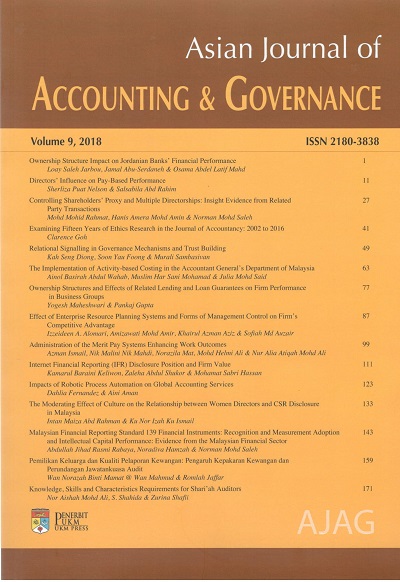
Downloads
Published
2018-05-07
Issue
Section
Articles
License
Authors who publish with this journal agree to the following terms:
- Authors retain copyright and grant the journal right of first publication with the work simultaneously licensed under a Creative Commons Attribution License that allows others to share the work with an acknowledgement of the work's authorship and initial publication in this journal.
- Authors are permitted and encouraged to post their work online (e.g., in institutional repositories or on their website) prior to and during the submission process, as it can lead to productive exchanges, as well as earlier and greater citation of published work (See The Effect of Open Access).
