Regulating Standard Form of Consumer Contracts: The Legal Treatment of Selected Asian Jurisdictions
DOI:
https://doi.org/10.17576/ajag-2010-1-6548Keywords:
standard form contract, unfair terms, consumers, Asian countriesAbstract
The use of standard form contract is extensively widespread in the era of globalisation. It has now become a predominant feature of many consumer contracts. Although initially it was formed as an agent to facilitate market transactions, it is now seen as hindering the business process and increasing the cost of goods. Its practice in the daily consumer transaction has drawn attention due to its nature and characteristics. Forms contract are not a result of a negotiation process; they are offered on a take it or leave it’ basis, they do not require meeting of mind and they are usually not read by consumers. Its contents often consist of unfair terms and exclusion clauses which often give benefits and advantage to the one who prepares the contract. In this new era, the practice of standard form contract reflects a new dimension of oppression of the consumers. It has further eroded the protection of consumers in many commercial transactions. Hence this paper aims at exploring comparatively the legal treatment on standard form contract in the context of consumer trade in selected Asian jurisdictions, namely Malaysia, Israel, Thailand and Peoples Republic of China.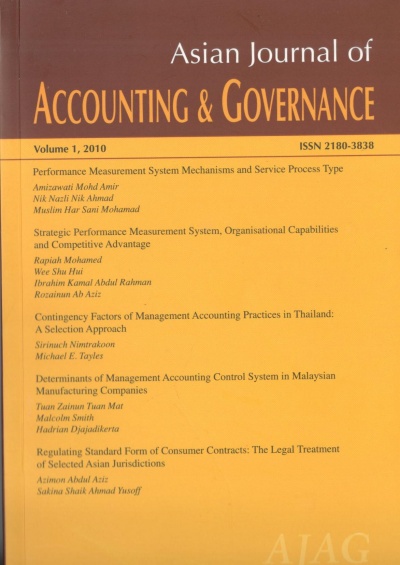
Downloads
Issue
Section
Articles
License
Authors who publish with this journal agree to the following terms:
- Authors retain copyright and grant the journal right of first publication with the work simultaneously licensed under a Creative Commons Attribution License that allows others to share the work with an acknowledgement of the work's authorship and initial publication in this journal.
- Authors are permitted and encouraged to post their work online (e.g., in institutional repositories or on their website) prior to and during the submission process, as it can lead to productive exchanges, as well as earlier and greater citation of published work (See The Effect of Open Access).
